
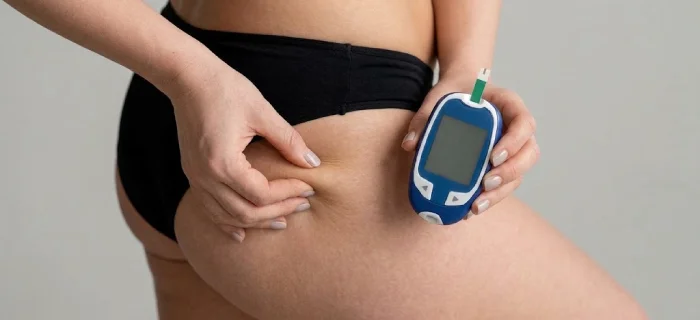





Can you get a BBL with diabetes? In many cases, yes. Diabetes does not automatically rule out a Brazilian butt lift (BBL), but how well your blood sugar is controlled, your overall health and your surgeon’s evaluation decide whether surgery is safe for you.
The same is true for other health factors. BMI, blood pressure, smoking and clotting history all shape who qualifies for a BBL in Miami. Here is what surgeons look for, how to prepare and what happens at your evaluation.
Can You Get a BBL With Diabetes? The Short Answer
Many patients with well-controlled diabetes can have a BBL. The key word is controlled.
A BBL combines liposuction with fat transfer, so your body has to heal two areas at once: the donor sites where fat is removed and the area where it is placed. High blood sugar slows healing and raises the risk of infection and wound problems.
Surgeons usually look at three things:
- Your recent A1C. Many surgeons look for 7% or lower, and some prefer 6.5% or lower for larger procedures.
- Your day-to-day blood sugar. Levels above 180 mg/dL are linked to a higher risk of infection.
- Your care team. Your surgeon should coordinate with your primary care doctor or endocrinologist before surgery.
If your numbers are not where they need to be yet, that is not a no. It often means “not yet,” with a plan to get you there. Our guide to tummy tuck and liposuction with diabetes explains the same principles in more detail.
Health Factors Surgeons Review Before a BBL
Type 1 Diabetes, Insulin and GLP-1 Medications
Type 1 diabetes and insulin use do not rule out surgery, but they call for closer glucose monitoring before, during and after the procedure.
If you take a GLP-1 medication such as Ozempic or Wegovy, tell your surgeon early. These medications may need to be adjusted before anesthesia. Never stop a medication on your own.
BMI and Available Donor Fat
There is no single BMI number that fits every patient. Surgeons weigh BMI together with body composition, because BMI is a screening tool, not a full picture of your health.
A higher BMI can raise surgical risk, and your surgeon may recommend working toward a healthier weight first. At the other end, a BBL uses your own fat, so very lean patients may not have enough donor fat to reach the shape they want. Our BMI and safe plastic surgery guide explains how BMI is used and where its limits are.
Blood Pressure and Heart Health
Well-controlled high blood pressure is often manageable, but it needs to be stable before surgery. Depending on your age and history, your surgeon may ask for an EKG or clearance from your cardiologist.
Heart, lung and liver conditions are evaluated carefully, and advanced cardiopulmonary disease can make elective surgery too risky.
Smoking and Nicotine
Nicotine restricts blood flow and interferes with healing. Plan to stop all nicotine at least one month before surgery and keep it out of your routine for at least two weeks afterward. Longer is better.
Clotting, Bleeding and Other Conditions
A history of blood clots, a clotting disorder or blood-thinning medication needs a careful review, since surgery and reduced movement during recovery add clotting risk. Bring a complete list of your medications and supplements to your evaluation.
Are You Likely to Be a Good BBL Candidate? A Quick Checklist
Use this table as a starting point for the conversation with your surgeon. It is not a diagnosis.
| Factor | What surgeons typically want to see | Why it matters |
|---|---|---|
| Blood sugar | Well-controlled diabetes, with a recent A1C in your surgeon’s target range | Supports healing and lowers infection risk |
| BMI | A range your surgeon considers safe for you | Affects surgical risk and available donor fat |
| Blood pressure | Stable and well managed | Lowers cardiovascular risk during anesthesia |
| Nicotine | None for at least one month before and two weeks after | Protects blood flow and healing |
| Donor fat | Enough in the abdomen, hips, back or thighs | A BBL uses your own fat |
| Medications | A full list, reviewed in advance | Blood thinners and GLP-1 medications may need adjusting |
| Support at home | Help during the first days of recovery | You cannot sit directly on your buttocks while healing |
Safety First: Choosing the Right Surgeon for a BBL
A BBL is a procedure where technique and experience matter. The main danger is fat embolism, which can happen when fat enters a large vein, and it has been linked to injecting fat into or under the muscle. Safety guidance from plastic surgery societies has moved away from placing fat in or under the muscle and toward the subcutaneous layer.
The American Society of Plastic Surgeons advises choosing a board-certified plastic surgeon with BBL experience, and asking how fat is placed and how that placement is confirmed. Ask every surgeon you consult those two questions.
Your BBL at Dolls Plastic Surgery starts with a medical evaluation with one of our board-certified surgeons, who will explain the technique and the safety measures for your case.
What Happens at Your BBL Evaluation
- Medical history review. Diabetes, medications, past surgeries, allergies and family history.
- Physical exam. Your surgeon assesses your donor areas and body proportions.
- Health screening and clearance. This may include lab work, an EKG and a note from your primary doctor or endocrinologist.
- Your personalized plan. Whether you are a candidate now, what to improve first and a realistic timeline.
Ready to find out where you stand? Start My Evaluation.
Recovery and Eligibility: Plan Ahead
Eligibility is not only about your numbers. It is also about whether you can recover well.
- You will wear a compression garment, and you will avoid sitting directly on your buttocks for about the first two weeks.
- Many patients return to work within about two weeks.
- Full recovery can take up to about two months, and strenuous activity waits until your surgeon clears you.
Our BBL aftercare tips walk through what healing looks like week by week.
Your Next Step
Diabetes, a higher BMI or high blood pressure do not automatically close the door on a BBL. What matters is how well your health is managed and whether a surgeon evaluates you carefully. Every patient is different, and only an in-person evaluation can tell you whether a BBL is right for you.
Learn more about the BBL at Dolls Plastic Surgery, then Start My Evaluation with a surgeon who will review your health history with you.
This article is for educational purposes and does not replace medical advice.
Frequently Asked Questions
Can you get a BBL if you have type 2 diabetes? Often, yes. Patients with well-controlled type 2 diabetes can be candidates. Your surgeon will review your recent A1C and daily blood sugar, and may coordinate with your primary care doctor or endocrinologist before approving surgery.
What BMI do you need for a BBL? There is no single BMI that applies to everyone. Surgeons weigh BMI alongside body composition, overall health and available donor fat. A higher BMI can increase surgical risk, and a very low BMI can limit how much fat can be transferred. Your surgeon will tell you where you stand.
Can you get a BBL with high blood pressure? Possibly. Blood pressure should be stable and well managed before surgery. Your surgeon may request an EKG or clearance from your doctor first.
Do I have to quit smoking before a BBL? Plan on it. Stop all nicotine at least one month before surgery and for at least two weeks afterward. Longer is better, because nicotine slows healing.
Can I get a BBL if I am very thin? It depends on how much donor fat you have. A BBL uses your own fat, so a lean frame can limit the volume available. Your surgeon can assess your donor areas and tell you what is realistic.